Scope
UX Design, UI Design, Interaction
Team / Individual
Personal
Domain
EdTech, Interactive Learning
Overview
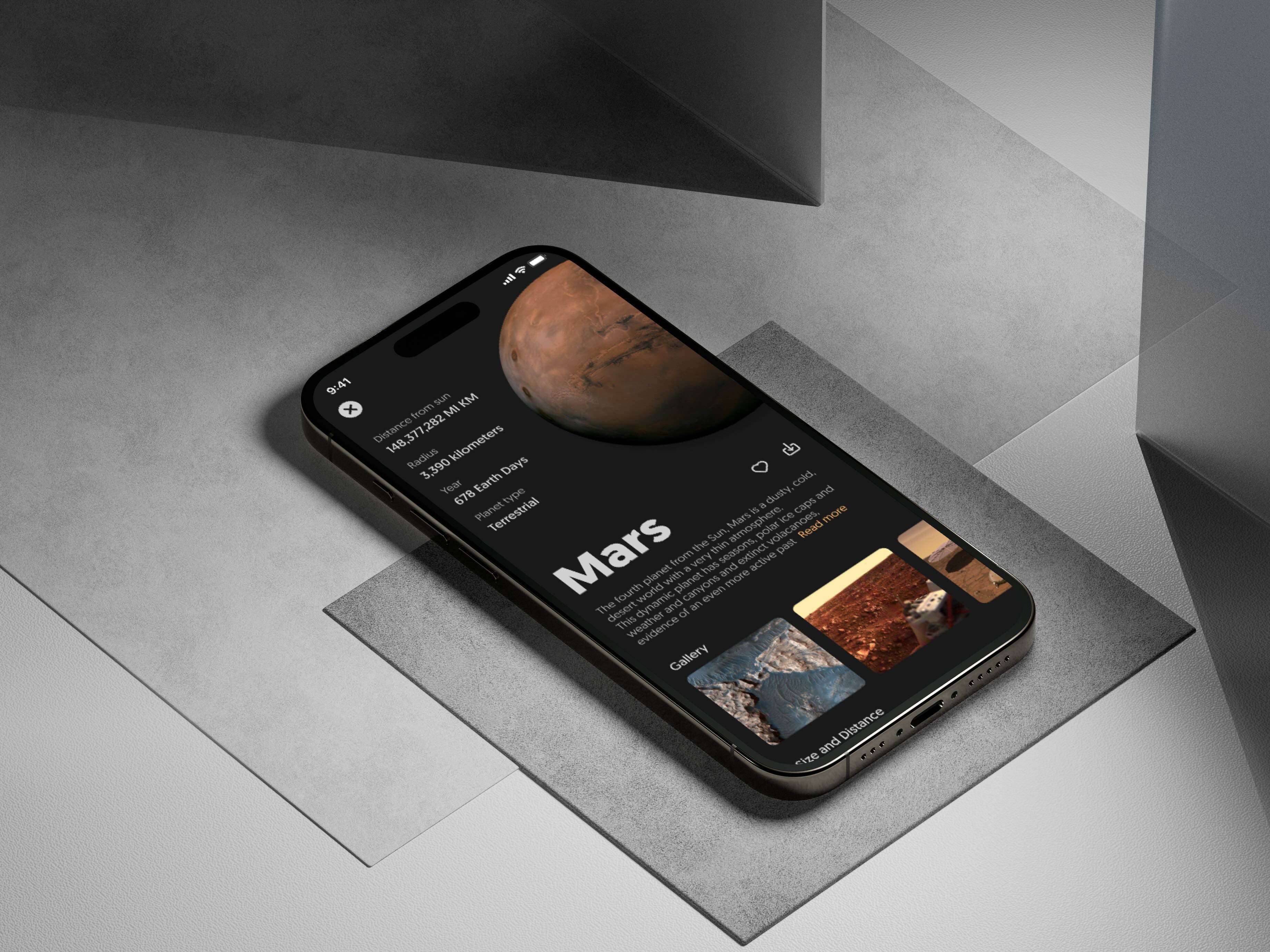
Solar System is an interactive learning concept created as a personal UI/UX and motion design practice project. The goal was to design an engaging digital experience that allows users to explore the planets through smooth animations, orbital effects, and delightful transitions — turning a simple educational topic into an immersive visual journey.
Problem statement
Most educational interfaces about space tend to rely on static visuals or dense scientific data, which can make learning feel distant and uninviting. This project aimed to explore how motion, interaction, and visual rhythm can make information more approachable, memorable, and emotionally engaging.
Objectives
Create an interactive experience that combines learning and play. Use motion design and visual storytelling to make planetary exploration intuitive and inspiring. Focus on smooth transitions, dynamic 3D-inspired effects, and a sense of spatial depth to bring the solar system to life.
Empathy
The concept was inspired by the curiosity of learners — both children and adults — who are fascinated by space but often lose interest in text-heavy or static presentations. The design needed to feel exploratory, calm, and visually satisfying, inviting users to stay and interact rather than passively read.
Define
The main design challenge was to balance scientific clarity with visual delight. The interface should be easy to navigate while evoking a sense of wonder. Each planet needed to have its own identity while maintaining consistency in the system’s visual style and motion pattern.
Ideate
I began sketching ideas around circular motion and orbit paths — the core structure of the solar system. I experimented with layered depths, glowing effects, and soft gradients to simulate light and space. The goal was to create a sense of cosmic harmony through minimalist yet expressive visuals.
Prototype
High-fidelity prototypes were built in Figma and Principle, focusing on interaction timing and motion smoothness. Hover states, planet rotations, and zoom transitions were refined to feel natural and fluid. Micro-interactions, such as orbit trails and fade-in labels, were added to make navigation feel intuitive and rewarding.
Test
The prototype was shared with fellow designers and educators for feedback. Testers appreciated the seamless transitions and atmospheric feel of the interface, noting that it made space learning more relaxing and emotionally immersive. Minor adjustments were made to improve text contrast and motion pacing.
Solution
The final concept presents the solar system as a calm, interactive playground for exploration. Smooth orbital animations guide users through each planet’s information, while dynamic lighting and scale transitions create a sense of realism and depth. Every interaction — from tapping a planet to returning to the system view — feels smooth, elegant, and meaningful.